
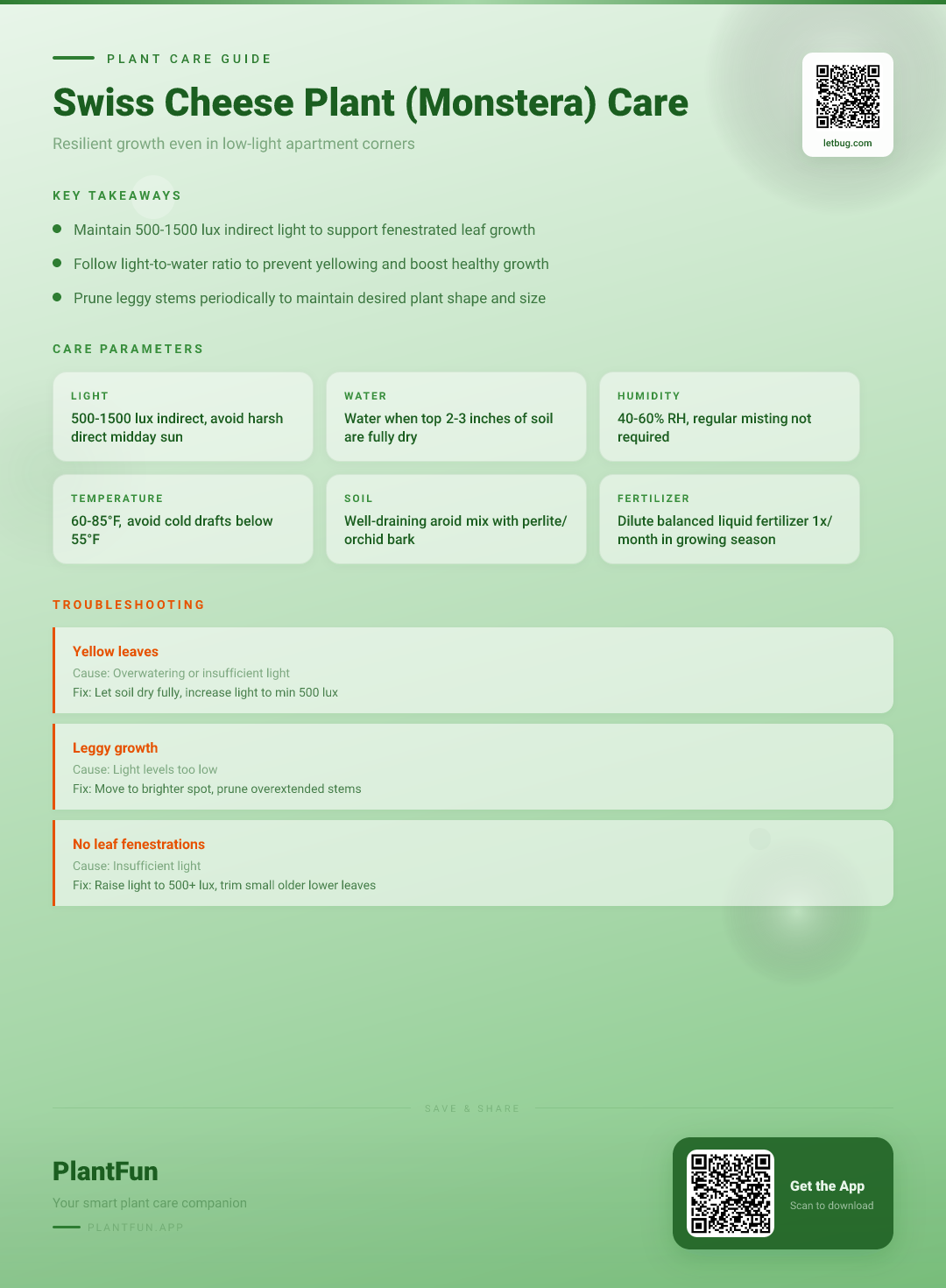
Key Takeaways
- Check soil moisture before watering — overwatering is the #1 killer of houseplants.
- Ensure your plant gets the right amount of light for its species.
- Be patient with recovery — most plants need 2–4 weeks to bounce back.
TL;DR: Your Monstera deliciosa can survive in low-light apartments if you master the light-to-water ratio. In dim conditions (500–1500 lux), your plant uses less water than in high light. Allow the top 2-3 inches of soil to dry completely between waterings to prevent root rot. Prioritize stable temperatures and avoid over-fertilizing during winter months.
Quick Care Card: Essential Thresholds for Your Monstera
| Feature | Requirement |
|---|---|
| Light | 500-1500 Lux (Bright Indirect) |
| Water | When top 2-3 inches of soil are dry |
| Humidity | 40-60% (Avoid direct drafts) |
| Temperature | 65-80°F (18-27°C) |
| Soil | Chunky Aroid Mix (Bark, Perlite, Peat) |
| Fertilizer | Balanced liquid 20-20-20, monthly in summer |
| Toxicity | Toxic to cats and dogs (ASPCA, 2026) |
My Experience: The “Dim Corner” Lesson
When I first started keeping a Monstera deliciosa in my studio apartment, I made the mistake of treating it like it was growing in a greenhouse. I kept the soil consistently damp, thinking it would love the moisture. Within a month, I noticed the lower leaves turning yellow—the classic sign of an overwatered Swiss Cheese Plant. I learned the hard way that in an apartment, low light doesn’t just mean slow growth; it means the plant’s metabolism slows down, drastically reducing its water consumption. Once I adjusted my schedule to wait for the soil to dry, my Monstera began producing those beautiful, fenestrated leaves again.
Why Your Swiss Cheese Plant Struggles in Apartment Corners
Many owners fail with Monstera deliciosa in apartment settings because they underestimate the physiological impact of low-light environments. According to the NC State Extension (2026), these plants are native to tropical forests where they receive filtered light. When placed in a dim corner, photosynthesis slows. Because the plant isn’t converting as much light into energy, it cannot “pump” water from the soil as effectively. This leads to stagnant moisture, which suffocates the roots.
Diagnostic Checklist: Is it Light, Water, or Both?
- The Finger Test: Stick your finger 2-3 inches into the soil. If it’s damp, do not water, even if it’s been a week.
- Leaf Color: Uniform yellowing often indicates a watering issue (overwatering), while smaller, pale leaves suggest a lack of light.
- Fenestration: If your mature plant stops producing slits or holes, it is likely starving for light.
Step-by-Step: Mastering the 500-1500 Lux Sweet Spot
- Measure Light: Use a digital light meter app or device to ensure your spot hits at least 500 lux. If it’s below 300, the plant will eventually decline.
- Optimize Proximity: Place the plant within 3-5 feet of a north or east-facing window.
- Reflect Light: Use light-colored walls or mirrors to bounce existing natural light toward the foliage.
- Rotate: Every two weeks, rotate the pot 90 degrees to ensure even growth and prevent the plant from leaning permanently toward the light source.
The Watering Equation: How Many Milliliters and How Often?
Avoid a fixed schedule. Instead, use a volume-based approach. For a 10-inch pot in low light, I typically use 300-500ml of water, but only when the soil is dry to the touch. This prevents the “wet feet” that cause root rot. For those new to Swiss Cheese Plant care for beginners, focus on the weight of the pot: a dry pot feels significantly lighter than a saturated one.
Seasonal Adjustments: Managing Growth Cycles in Climate-Controlled Spaces
Your apartment is likely climate-controlled, which can confuse your plant. During winter, reduce watering by 30-40%. Even if the temperature stays constant, lower day-length triggers a dormancy phase. Keep your plant away from heating vents, which sap humidity and trigger premature browning of leaf tips.
Myth-Busting: Do You Really Need to Mist Your Monstera?
Misting is a common apartment plant care tip that is largely ineffective. It provides only a fleeting increase in humidity and can actually encourage fungal growth on foliage. Instead of misting, use a pebble tray with water beneath the pot (without the pot touching the water) or a small room humidifier if your apartment humidity drops below 30%.
Voice FAQ
Why is my Swiss Cheese Plant turning yellow?
Yellowing is the primary indicator of an overwatered Swiss Cheese Plant. Check if your soil is staying soggy for too long. If the soil is well-draining, it might be a nutrient deficiency.
How do I know if my Monstera is getting enough light?
Look for “stretching” or long, thin stems between leaves (etiolation). If the plant is leaning heavily and the leaves are small, it needs a brighter spot.
Should I prune my Monstera if it gets too leggy?
Yes. Pruning encourages lateral growth. If your plant has become excessively leggy due to low light, cut back the stem just above a node (where the leaf meets the stem) to promote a bushier habit.
Long-Term Maintenance: When to Fertilize and Repot
Only fertilize during the active growing season (spring and summer). Use a balanced 20-20-20 liquid fertilizer diluted to half-strength. Repot only when roots begin to circle the bottom of the pot, typically every 18-24 months. Always use a chunky aroid mix, which ensures the drainage necessary for healthy root respiration.
References and Botanical Guidelines
- ASPCA. (2026). Toxic and Non-Toxic Plants List — ASPCA. https://www.aspca.org/pet-care/animal-poison-control/toxic-and-non-toxic-plants. Accessed 2026-03-18.
- NC State Extension. (2026). Swiss Cheese Plant — NC State Extension Gardener Plant Toolbox. https://plants.ces.ncsu.edu/plants/plant-care/. Accessed 2026-03-18.
- Bily, D., Gyatso, T., & Evans, A. (2024). First Detection of Pseudocerradoa paullula Causing Aroid Leaf Rust on Swiss Cheese Plant (Monstera deliciosa) in Virginia. Plant Disease. https://doi.org/10.1094/pdis-07-24-1540-pdn. Accessed 2026-03-18.
- Urbina, H., Jones, C., & Moore, M. (2023). Detection of Aroid Leaf Rust Pseudocerradoa paullula on Swiss Cheese Plant Monstera deliciosa in the Continental United States. Plant Disease. https://doi.org/10.1094/pdis-01-23-0134-pdn. Accessed 2026-03-18.
Optional Helper: Plantfun.App
Plantfun.App identifies your plants by photo, diagnoses pests and diseases with clear fixes, and creates personalised watering and light schedules that adapt to your home conditions — a handy companion for putting this guide into daily practice.
Found an error or have suggestions? We'd love your feedback.
Need help identifying this problem?
Get instant identification, personalized care schedules, and effective pest treatment plans directly on your phone.
Sponsored • We may earn a commission from app downloads
Related Guides
Monstera Deliciosa in a Dry Apartment: The Complete Care Guide for Resilient Growth
Transform your struggling Monstera into a thriving centerpiece. Follow our exact 50% humidity protocol and light-based watering cycles for lush, fenestrated leaves.
Care GuideMonstera Deliciosa in Apartment Living: The Resilient Growth Guide for Consistent, Lush Foliage
Unlock lush Monstera growth in your apartment. Master seasonal watering, specific light thresholds, and foliage care to keep your plant vibrant all year round.
Care GuideThe Complete Monstera Deliciosa Care Guide for Apartment Living: Light, Water, Soil & More
Master Monstera deliciosa care in your apartment with our 4-step growth checklist. Get precise light, humidity, and water settings for a thriving, space-saving plant.
ToolMonstera Deliciosa in East-Facing Apartments: Budget & Pro Tools for Perfect Light & Water
Stop guessing light and water for your east-facing Monstera deliciosa. Get budget and pro tool picks, exact care thresholds, and a seasonal guide to keep leaves lush and full of fenestrations.